Affiliate Disclosure: This post may contain affiliate links. If you purchase through them, DobermanSmarts may earn a small commission at no additional cost to you. We only recommend products, tools, and resources we genuinely believe can help Doberman owners.
You’ll train your Doberman for Fast CAT by building cardiovascular fitness through consistent conditioning, developing prey drive with gradual lure introduction, and progressing speed incrementally from walking pace to full sprints. Start with a 12-month-old dog that’s AKC registered, assess their natural enthusiasm for chasing, and practice 5-10 minute sessions with high-value rewards. Focus on proper warm-up and cool-down routines to prevent injury, then enter local AKC events to accumulate points toward titles. Understanding the specific techniques and timeline will greatly enhance your competition results.
- Key Takeaways
- What Is Fast CAT and Why Dobermans Excel at It
- Is Your Doberman Ready for Fast CAT?
- Do Dobermans Meet Fast CAT Eligibility Requirements?
- Assess Your Doberman’s Prey Drive
- What Gear You’ll Need to Get Started
- Introduce Your Doberman to the Fast CAT Lure
- Use Rewards to Drive Lure-Chasing Behavior
- Building Speed for Fast CAT With Progressive Distance
- Fast CAT Warm-Up Routines to Prevent Injury
- Condition for Speed: Fast CAT-Specific Drills
- Training on Varied Terrain
- Build Laser Focus on the Lure
- Create Your Fast CAT Training Schedule
- Fast CAT Training Mistakes Dobermans Make
- Measure Your Doberman’s Speed and Chase Titles
- Finding Fast CAT Events in Your Area
- Prepare for Your First Fast CAT Competition
- Post-Run Recovery and Injury Prevention
- Track Your Doberman’s Times and Titles
- Frequently Asked Questions
- Conclusion
Key Takeaways
- Fast CAT is a 100-yard timed dash where Dobermans chase a lure at speeds of 35-45 mph with size-based handicap scoring.
- Dogs must be at least 12 months old with AKC registration and pass pre-run physical soundness inspections before competing.
- Introduce lures gradually in quiet spaces, using high-value treats and positive reinforcement to build prey drive and engagement consistently.
- Condition Dobermans through interval training, hill sprints, and fetch activities to develop explosive speed, cardiovascular capacity, and muscular endurance.
- Allow 10-15 minute cool-downs post-run, provide fresh water and recovery treats, and inspect for lameness to prevent overuse injuries.
What Is Fast CAT and Why Dobermans Excel at It
If you’re looking for a competitive outlet that lets your Doberman’s natural athleticism shine, Fast CAT—officially known as the Coursing Ability Test—offers exactly that opportunity.
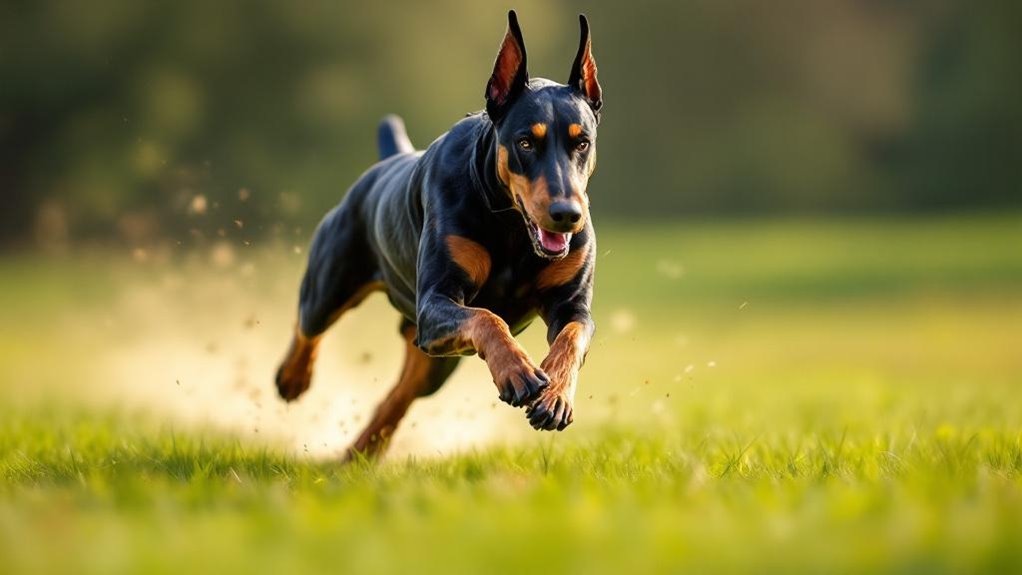
This dog sport involves a timed 100-yard dash where your Doberman chases a lure, tapping into their instinctive prey drive while showcasing raw speed.
Dobermans excel at Fast CAT because they’re built for this competition. Your dog can reach speeds between 35-45 mph, giving them a genuine advantage in the sport.
Their natural drive, combined with their athletic frame, makes them well-suited competitors. Additionally, the sport’s scoring structure uses size handicap multipliers, so your Doberman doesn’t face disadvantages despite typically standing over 18 inches tall.
This fairness guarantees your dog competes on equal footing regardless of size.
Is Your Doberman Ready for Fast CAT?
Before you enter your Doberman in Fast CAT competition, you’ll need to evaluate whether your dog meets the essential requirements: a minimum age of 12 months, sound physical condition, and the temperament to handle the excitement and social environment of a racing event.
Your dog’s fitness level directly affects performance and safety, so you should assess their current cardiovascular capacity, muscle development, and any existing joint or structural concerns through both observation and veterinary consultation.
You’ll also want to contemplate your Doberman’s emotional readiness by observing how they respond to new situations, unfamiliar dogs, and stimulating environments, since comfort and confidence at competitions depend on both physical preparation and behavioral stability.
Physical Fitness Requirements
Several key fitness components must be in place for your Doberman to compete safely and effectively in Fast CAT, and establishing these elements requires a structured approach to conditioning. Your dog’s natural athleticism will flourish with consistent physical fitness preparation.
Build your Doberman’s foundation through these essential components:
- Regular cardiovascular exercise through brisk walking, running, and play sessions that strengthen heart and lung capacity.
- Agility training combined with high-intensity interval training to sharpen speed and reaction times for lure chasing.
- Weight management ensuring lean muscle development, which reduces injury risk during competitive sprints.
- Veterinary evaluation confirming your Doberman’s fitness level and receiving personalized exercise recommendations.
Monitor your dog’s body condition consistently, adjusting intensity and duration based on their individual response.
This measured approach builds reliability in performance while protecting your Doberman’s long-term health and competitive readiness.
Age And Development Milestones
Once you’ve built your dog’s physical foundation through consistent conditioning, you’ll need to assess whether your Doberman has reached the developmental stage required for competitive Fast CAT participation.
Your Doberman must be at least 12 months old before entering Fast CAT events, guaranteeing their bones and muscles have matured sufficiently for the demanding 100-yard dash. This age requirement protects your dog from injury during the vital growth phase.
Beyond meeting the minimum age threshold, you should evaluate your Doberman’s training progress in basic obedience commands, which establishes reliability during the excitement of competition.
Early physical exercise and mental stimulation during puppyhood create the foundation necessary for successful Fast CAT training. Verifying these developmental milestones confirms your Doberman can safely and effectively compete.
Temperament Assessment Indicators
Most Dobermans possess the natural temperament that Fast CAT demands, since their high energy levels and strong prey drive align naturally with chasing a moving lure across a measured course.
A thorough temperament assessment reveals whether your dog displays the specific attributes necessary for competition success:
- Enthusiasm and confidence when approaching novel situations and equipment
- Strong responsiveness to your recall commands under excitement
- Physical fitness capable of sustaining the 100-yard dash intensity
- Calm focus after high-arousal activities, indicating reliable emotional regulation
Observe how your Doberman reacts to moving objects, as this reveals inherent prey drive activation.
Evaluate whether socialization with other dogs and environmental stimuli produces controlled excitement rather than anxiety or aggression.
Gradual exposure to the lure during short practice runs provides concrete data about your dog’s ability to maintain consistency, structure, and reliability throughout the competitive experience.
Do Dobermans Meet Fast CAT Eligibility Requirements?
Can your Doberman compete in Fast CAT events, and if so, what’ll you need to verify before entering?
Your Doberman’s eligibility depends on several concrete requirements. First, your dog must be at least 12 months old, establishing the minimum maturity threshold.
Your Doberman must reach at least 12 months old to compete in Fast CAT events, meeting the minimum maturity requirement.
Second, you’ll need either an AKC registration number or enrollment through AKC Canine Partners if your Doberman is mixed breed.
Third, physical soundness matters greatly; officials will conduct pre-run inspections to confirm your dog meets structural standards before competition approval.
Regarding reproductive status, spayed or neutered Dobermans compete without restriction. However, intact females currently in heat can’t participate.
These eligibility criteria remain consistent across all competitors, ensuring fair competition and reliable standards for Fast CAT events.
Assess Your Doberman’s Prey Drive
Your Doberman’s natural prey drive will greatly influence their potential success in Fast CAT training, as this breed possesses the genetic predisposition and physical capabilities that make them well-suited for lure-coursing activities.
To assess your dog’s readiness, you’ll need to evaluate their response to prey-like stimuli using these methods:
- Introduce flirt poles and moving lures to observe enthusiasm levels
- Watch for quick, focused reactions that indicate strong prey drive
- Note sustained attention and excitement during interactions with toys
- Document consistency in responses across multiple training sessions
Gradually expose your Doberman to lures in controlled environments, maintaining their focus on the moving object.
Consistent positive reinforcement enhances their natural prey drive, preparing them for Fast CAT competition demands. This structured approach reliably identifies whether your dog possesses the necessary drive for success.
What Gear You’ll Need to Get Started
Once you’ve confirmed your Doberman possesses the prey drive and focus needed for Fast CAT competition, you’ll want to gather the specific gear that supports both training and event participation.
A properly fitting collar guarantees comfort and control during your dog’s run, while a durable leash safely manages your Doberman before and after the event. You’ll need water and treats to maintain hydration and motivation throughout the day.
A crate or portable pen provides essential downtime, reducing excitement before your dog’s turn. Additionally, obtain a lure that matches the chase mechanism used in Fast CAT events, allowing you to practice consistently with your Doberman.
A portable crate reduces pre-event excitement while a matching lure enables consistent Fast CAT training preparation.
This gear establishes the structure and reliability necessary for effective training and successful competition.
Introduce Your Doberman to the Fast CAT Lure
You’ll begin by presenting your Doberman with a stationary lure in a quiet, controlled space, allowing them to investigate the object and build natural curiosity without the pressure of movement or speed.
Once your dog shows consistent interest in the lure, you’ll gradually introduce slow movement, letting your Doberman chase at a comfortable pace while you reward engagement with high-value treats, which strengthens the positive association and builds their prey drive in a structured, predictable way.
As your dog gains confidence and reliability with the stationary and slow-moving lure, you’ll incrementally increase the speed of movement across multiple sessions, ensuring they understand the chase concept and remain calm during changes between leashed and running periods.
Building Prey Drive Interest
The foundation of Fast CAT success rests on introducing your Doberman to the lure in a way that creates positive associations with chasing. This introduction works best when you begin with familiar, playful items like plastic bags that mimic the actual lure’s movement and appearance.
Your training tips should emphasize building prey drive through structured engagement. Consider these essential elements:
- Use treats and verbal praise immediately after your Doberman shows interest in the lure.
- Keep initial sessions brief, five to ten minutes, maintaining focus and enthusiasm.
- Gradually increase lure speed as your dog demonstrates consistent chasing behavior.
- Practice consistently, establishing reliability and strengthening natural instincts.
Consistency in practice develops stronger desire to chase. This structured approach guarantees your Doberman associates the lure with positive experiences, creating a foundation for enthusiastic Fast CAT participation.
Lure Familiarization Techniques
Before your Doberman can chase the actual lure at full speed, they need to understand what it’s and why chasing it matters. So you’ll start with a stationary lure or a toy that mimics its movement in a controlled environment. This gradual introduction builds interest without overwhelming your dog.
Once your Doberman shows curiosity, you’ll incorporate positive reinforcement through treats and praise each time they engage with the lure. Short, focused practice sessions establish reliability and consistency in their responses.
Keep these early sessions brief to maintain enthusiasm and prevent frustration. As your Doberman becomes comfortable with the stationary lure, you’ll slowly introduce subtle movements, allowing them to develop the confidence necessary for fast-paced chasing activities later.
Gradual Speed Progression
Once your Doberman has developed comfort with the stationary lure and understands the basic concept of chase, it’s time to introduce controlled movement at gradually increasing speeds. You’ll now shift from observation to active participation, allowing your dog to run fast while maintaining safety and consistency throughout the training process.
Progress systematically through these phases:
- Start the lure at walking speed, letting your Doberman follow without sprinting.
- Increase to a gentle trot, observing your dog’s confidence and response.
- Move to a moderate pace, rewarding engagement with treats and praise.
- Build toward faster speeds only after your dog demonstrates reliability and fitness.
Monitor your Doberman’s physical condition closely during each phase, ensuring they’re healthy and energized before advancing further.
Use Rewards to Drive Lure-Chasing Behavior
Rewards form the foundation of lure-chasing training because they create clear motivation and reinforce the behaviors you’re developing in your Doberman. High-value treats, such as small meat pieces, or favorite toys work effectively to drive consistent lure-chasing responses during training sessions.
You should deliver rewards immediately after your dog successfully chases the lure, creating a direct connection between the action and the positive outcome. Incorporating a clicker or verbal praise at the moment of chase helps solidify the desired behavior, giving your Doberman clarity about what earns reinforcement.
This immediate consistency builds reliability, making your dog increasingly enthusiastic to participate in training and competitions. The structure of consistent rewards transforms lure-chasing from an uncertain activity into a predictable, rewarding experience your Doberman actively pursues.
Building Speed for Fast CAT With Progressive Distance
As your Doberman develops confidence in chasing the lure through consistent rewards and clear reinforcement, you’re ready to build the speed and endurance necessary for competitive Fast CAT performance, which requires a structured approach to distance progression.
Start with these foundational steps:
- Begin on a 50-yard course to establish familiarity with the lure and develop consistent running mechanics.
- Progress to 75 yards once your dog demonstrates reliable speed and focus throughout shorter distances.
- Advance to the full 100-yard dash when your dog’s time shows measurable improvement at intermediate distances.
- Incorporate interval training by alternating sprinting with walking periods to enhance overall cardiovascular fitness.
Regularly timing your dog’s performance allows you to track progress objectively and adjust your training methods accordingly, ensuring building speed happens through reliable progression rather than rushed advancement.
Fast CAT Warm-Up Routines to Prevent Injury
Before your Doberman hits full speed on the Fast CAT course, you’ll need to establish a reliable warm-up routine that prepares both muscles and mind for the intensity ahead.
Start with a gentle leash walk lasting five to ten minutes, which increases blood flow to the muscles and readies your dog for activity. Follow this with dynamic stretches like leg swings and high knees for approximately five minutes to enhance flexibility and range of motion.
Then incorporate specific warm-up exercises such as gradual sprints or short jogging bursts that mimic Fast CAT intensity, gradually increasing speed. Use positive reinforcement throughout to maintain focus and enjoyment.
After running, allow a cool-down period with light walking or gentle stretching to prevent stiffness and support recovery.
Condition for Speed: Fast CAT-Specific Drills
You’ll build explosive speed through high-intensity interval training that alternates short sprints with recovery periods, allowing your Doberman’s muscles to develop power while preventing overexertion.
Endurance and stamina develop when you gradually extend practice run distances toward the full 100-yard dash, giving your dog’s cardiovascular system time to adapt and maintain consistent velocity throughout competition.
This structured approach to conditioning—combining intense efforts with progressive distance increases—creates the physical foundation your Doberman needs for reliable Fast CAT performance.
Building Explosive Speed
Building explosive speed requires a structured approach that targets the specific demands of the Fast CAT event, which tests a dog’s ability to accelerate rapidly over a 100-yard distance.
You’ll develop your Doberman’s power through focused training methods:
- Incorporate short sprints of 30-50 yards during sessions to build rapid acceleration capability.
- Use lure motivation with a toy simulating the Fast CAT lure to engage natural chasing instincts.
- Implement interval training, alternating high-speed sprints with recovery periods for sustained performance.
- Practice starting techniques using a release command to guarantee quick reactions from stationary positions.
You must consistently monitor your dog’s running form and fitness levels through timed drills.
This approach minimizes injury risk while maintaining peak speed, establishing the reliability your Doberman needs for competitive Fast CAT performance.
Endurance and Stamina Development
Once your Doberman can generate explosive speed in short bursts, you’ll need to develop the cardiovascular capacity and muscular endurance that allows him to maintain peak performance throughout a Fast CAT run and across multiple heats in a competition day. Building stamina requires structured progression, beginning with shorter distances and gradually extending training runs to 100 yards as your dog gains strength and confidence. Interval training creates the foundation for endurance, alternating intense sprints with recovery periods to mirror actual competition demands. Hill sprints build muscular power while enhancing cardiovascular fitness, preparing your Doberman for sustained effort. Incorporate fetch and chase activities to stimulate natural instincts while reinforcing endurance conditioning.
| Training Method | Duration | Intensity | Frequency | Purpose |
|---|---|---|---|---|
| Interval Sprints | 20-30 minutes | High/Recovery cycles | 3x weekly | Cardiovascular adaptation |
| Distance Runs | 15-25 minutes | Moderate | 2x weekly | Stamina building |
| Hill Sprints | 10-15 minutes | High | 2x weekly | Muscle strength |
| Fetch Sessions | 20 minutes | Variable | 3x weekly | Instinct engagement |
| Recovery Days | Full rest | None | 2x weekly | Adaptation period |
Training on Varied Terrain
Exposing your Doberman to varied terrain during training fundamentally strengthens their adaptability and confidence, two qualities that’ll directly influence their performance in Fast CAT events. You’ll notice significant improvements when you strategically incorporate different surfaces and challenges into your routine.
- Grass, gravel, and dirt surfaces build foundational familiarity and prevent surface hesitation during competition.
- Uphill and downhill runs engage distinct muscle groups, developing extensive strength and sustained speed capacity.
- Low bushes and gentle slopes simulate authentic Fast CAT environments, teaching focus amid distractions.
- Progressively challenging terrain guarantees your dog navigates varied surfaces without hesitation when competing.
Monitor your Doberman’s physical condition consistently, gradually increasing difficulty to prevent injury. This structured approach develops the reliability and consistency your dog needs for successful Fast CAT performance.
Build Laser Focus on the Lure
You’ll develop your Doberman’s laser focus on the lure by activating their natural prey drive through high-value rewards that create immediate, consistent associations between the moving target and positive outcomes.
Building this foundation requires you to establish reliable lure tracking fundamentals in distraction-free settings, then gradually layer in environmental complexity as your dog demonstrates sustained attention during short, confidence-building practice runs.
Your dog’s ability to maintain focus directly depends on the structure and consistency of your training sessions, where immediate rewards reinforce each successful chase and strengthen the connection between concentration and payoff.
Prey Drive Activation Techniques
Because your Doberman’s natural prey drive forms the foundation for successful Fast CAT performance, activating this instinct requires a structured approach that builds focus gradually rather than overwhelming your dog with intensity.
You’ll develop your dog’s enthusiasm through consistent, purposeful training that channels their natural instincts effectively.
- Introduce the lure gradually during short sessions to spark genuine interest without overstimulation.
- Use toys mimicking prey movement, such as squeaky balls or plush toys, to create strong chasing associations.
- Incorporate regular play sessions reinforcing the behavior and encouraging intense focus on the target.
- Reward successful lure interactions immediately with treats or praise to strengthen their desire to chase.
Gradually increase the lure’s movement distance during practice sessions, allowing your Doberman to experience chasing thrills while building confidence in their speed and agility.
Lure Tracking Fundamentals
Once your Doberman has developed genuine enthusiasm for chasing, the next step is building laser-like focus on the lure itself, which requires consistent structure and reliable tracking practice in controlled environments.
You’ll use short training sessions to encourage your dog running after the plastic bag lure, gradually extending distance as their concentration improves. Each successful follow-through earns treats and praise, reinforcing their drive and engagement with lure coursing fundamentals.
Incorporate leash work to establish clear start-and-stop commands, ensuring your Doberman understands when tracking begins and ends.
Vary your lure movements and placements regularly, building anticipation and sharpening their focus for actual Fast CAT course conditions. This methodical approach develops the reliable, sustained attention your dog needs for competitive success.
Sustained Attention Development
Building on the foundation of consistent lure following, the next phase focuses on deepening your Doberman’s concentration so that they maintain unwavering attention on the target throughout the entire run.
To develop sustained attention, implement these strategies:
- Select high-value lures that genuinely excite your dog’s prey drive, creating genuine motivation rather than reluctant compliance.
- Begin with short sessions lasting only minutes, then gradually extend duration as your dog builds concentration capacity.
- Practice across varied environments where distractions exist, teaching your Doberman to focus on the lure regardless of external stimuli.
- Deliver immediate positive reinforcement each time your dog demonstrates focus, reinforcing the connection between attention and reward.
Reward incremental improvements consistently. This approach builds reliability in your dog’s sustained attention during actual Fast CAT events.
Create Your Fast CAT Training Schedule
A well-structured training schedule provides the foundation for your Doberman’s success in Fast CAT events, establishing consistency and reliability in both your dog’s performance and your training approach.
Begin by introducing your dog to the lure in a safe, enclosed space, allowing them to develop confidence and tap into their dog’s natural chase instinct. Gradually increase distances, starting with short intervals before progressing to the full 100-yard dash as your Doberman becomes comfortable.
Incorporate regular agility exercises to enhance speed and reaction time. Schedule practice runs at local Fast CAT events to acclimate your dog to competition atmosphere and noise.
Include warm-up and cool-down sessions in every training session to prevent injuries and support recovery, ensuring your dog remains healthy and prepared throughout your training cycle.
Fast CAT Training Mistakes Dobermans Make
You can undermine your Doberman’s performance by overtraining before competition, pushing too hard in the weeks leading up to an event and leaving your dog fatigued rather than sharp.
Ignoring conditioning fundamentals—such as proper warm-up routines, consistent training schedules, and appropriate rest days—creates unreliability in your dog’s responses and increases the risk of injury when you need peak performance.
Building a sustainable training structure with gradual progression and attention to physical preparation guarantees your Doberman arrives at Fast CAT events ready to run effectively.
Overtraining Before Competition
When the competition date approaches, many Doberman handlers intensify training sessions without realizing they’re undermining their dog’s performance, not improving it. Overtraining before a Fast CAT event creates significant problems that directly compromise your dog’s success.
You should recognize these critical consequences:
- Your Doberman experiences fatigue that reduces enthusiasm during the actual run, diminishing their natural speed and drive to chase the lure.
- Muscle strain and injury risk increase when you skip proper warm-up and cool-down routines before high-speed sprints.
- Frequent training without adequate recovery time causes burnout, eroding your dog’s desire to compete.
- Your dog loses engagement with the lure when training focuses solely on speed without varied exercises.
Balance your approach with consistent play, rest days, and moderate training intensity to maintain your Doberman’s motivation and physical readiness.
Ignoring Conditioning Fundamentals
Establishing a solid conditioning foundation differs fundamentally from managing training intensity, and it’s where many Doberman handlers create problems that surface during competition. You can’t expect peak performance from a dog whose muscles lack the endurance required for sustained sprints.
Neglecting proper conditioning and physical fitness routines results in your Doberman struggling during the timed runs, as they need consistent preparation to maximize their speed. Without structured workouts that build cardiovascular strength and muscle resilience, your dog becomes fatigued quickly, undermining all your technical training.
Incorporate regular aerobic exercise, strength-building activities, and progressive conditioning schedules into your preparation plan. This consistency guarantees your Doberman’s body adapts properly, allowing them to deliver reliable performance when it matters most during Fast CAT events.
Measure Your Doberman’s Speed and Chase Titles
How do you know if your Doberman’s performance is improving in Fast CAT competition, and what does it take to earn recognized titles in this sport?
You’ll measure your dog’s MPH using a straightforward formula: divide 204.545 by your dog’s run time in seconds. This calculation reveals your Doberman’s actual speed and provides concrete data for tracking improvement over time.
Your dog accumulates points toward titles through consistent participation:
- Earning your BCAT title at 150 points marks your first major achievement
- Reaching 500 points qualifies you for the DCAT title
- Building points requires regular event attendance and reliable performance
- Climbing rankings demonstrates your commitment to the sport
The speed handicap of 1.0 for Dobermans over 18 inches tall factors into point calculations after each run, ensuring fair competition and consistent reliability across the sport’s structure.
Finding Fast CAT Events in Your Area
Once you’ve set your sights on earning titles and tracking your Doberman’s speed improvements, you’ll need to find actual Fast CAT events where you can compete.
Start by utilizing the AKC Event Search tool, filtering results by date, state, and event type to locate upcoming events near you. Contact local AKC clubs directly, as they frequently host Fast CAT competitions and can provide current information about schedules.
Facebook groups dedicated to dog sports often announce testing opportunities and offer valuable community insights. Plan ahead strategically, since most events occur during spring, summer, and autumn months.
Additionally, check premium lists for all-breed dog shows in your region, as organizers often schedule Fast CAT testing alongside these larger competitions, expanding your available opportunities.
Prepare for Your First Fast CAT Competition
Before you enter your Doberman into a Fast CAT event, you’ll need to confirm that your dog meets the competition’s eligibility requirements, which include being at least 12 months old and possessing a valid AKC registration number.
Once your dog’s eligible to compete, prepare systematically through these essential steps:
- Build prey drive through chasing activities that simulate the lure’s movement.
- Visit local practice sessions to familiarize your Doberman with the course layout.
- Perform warm-up exercises including light jogging and play before competition.
- Gather necessary items: comfortable collar, leash, water, and positive reinforcement treats.
This structured approach develops your Doberman’s physical readiness and mental focus, establishing consistency and reliability in their performance during the actual Fast CAT event.
Post-Run Recovery and Injury Prevention
Your Doberman’s performance during a Fast CAT run represents only part of the competition experience, as what you do after the event greatly impacts your dog’s long-term health and ability to compete consistently.
Post-run recovery and injury prevention require immediate attention and systematic care. Leash your Doberman immediately after finishing to prevent additional exertion that could cause overuse injuries.
Allow a 10-15 minute cool-down period, during which their heart rate stabilizes and muscles begin recovering. Provide fresh water and recovery treats to replenish energy and support muscle repair.
Before and after runs, inspect your dog for lameness or discomfort.
Establish a regular flexibility and strength training routine to build resilience and reduce injury risk. These structured practices guarantee your Doberman remains healthy and reliable for future competitions.
Track Your Doberman’s Times and Titles
Tracking your Doberman’s performance data creates the foundation for understanding progress and planning future competition strategy. As a dog’s owner, you’ll record run times to the hundredth of a second, then calculate speed using the formula 204.545 divided by your dog’s time in seconds. This consistency builds reliability in your assessment process.
Points accumulate through multiplying speed by your Doberman’s height-specific handicap, driving you toward milestone titles:
- BCAT at 150 points—recognizing initial consistency and dedication
- DCAT at 500 points—demonstrating sustained improvement and training structure
- FCAT at 1000 points—celebrating elite performance and long-term commitment
Competition records noting dates and locations—enabling strategic planning.
Maintaining detailed Fast CAT records transforms raw data into meaningful insight, guiding your training decisions and competition selections effectively.
Frequently Asked Questions
How to Train a Dog to Do Fast Cat?
You’ll build excitement with lures in enclosed spaces, gradually introduce short sprints, condition your dog regularly, use positive reinforcement, and familiarize them with competition environments through local events.
Is a Doberman Good With Cats?
You can train your Doberman to coexist peacefully with cats through early socialization and positive reinforcement. While they’ve got a strong prey drive, you’ll find that proper training and supervision helps them see cats as family members.
Why Do Police Not Use Dobermans Anymore?
You’re barking up the wrong tree if you think police still favor Dobermans. They’ve ditched them because you’ll find German Shepherds and Belgian Malinois outperform them in trainability, scent detection, and temperament stability for law enforcement.
How Old Does a Dog Have to Be for Fastcat?
Your dog must be at least 12 months old to compete in official Fast CAT events. You can enter younger dogs in fun runs, which may have different age requirements depending on the specific event you’re attending.
Conclusion
You’ve now equipped your Doberman with the structure and consistency that Fast CAT demands, transforming your dog into a reliable sprinter through methodical preparation and proper recovery. Your dedication to tracking times and titles mirrors a coach reviewing film reels on ancient projectors, examining each run’s nuances to refine performance. This reliability you’ve built—from eligibility verification through post-run care—positions your Doberman for sustained success in this demanding sport.