Affiliate Disclosure: This post may contain affiliate links. If you purchase through them, DobermanSmarts may earn a small commission at no additional cost to you. We only recommend products, tools, and resources we genuinely believe can help Doberman owners.
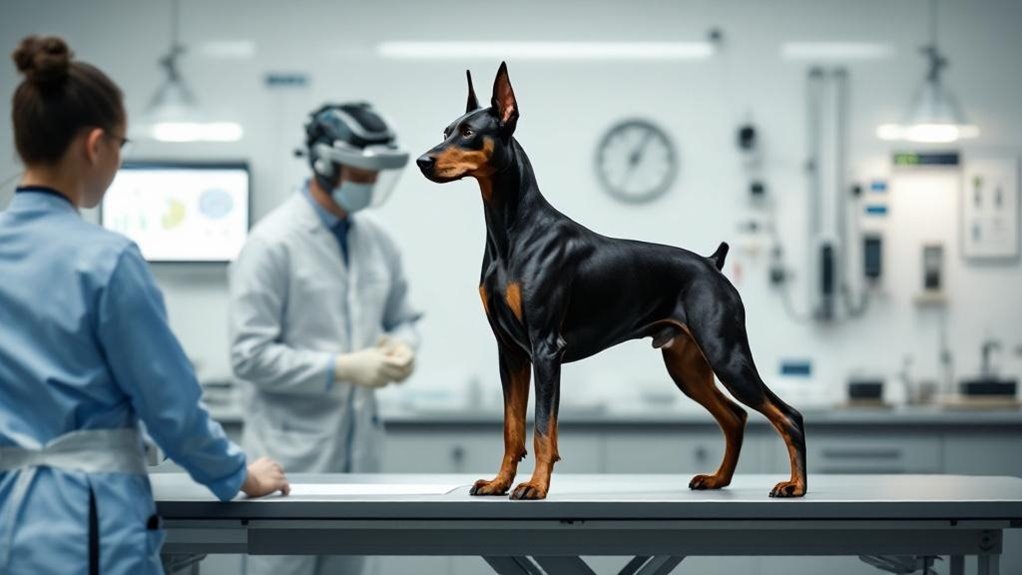
You’ll strengthen your sport Doberman breeding program by prioritizing genetic testing for DCM markers—PDK4, TTN, and emerging DCM3 and DCM4 variants—since dilated cardiomyopathy affects roughly 58% of the breed and directly compromises athletic capacity. Combine genetic screening with echocardiograms and Holter monitoring, evaluate inbreeding coefficients below 3%, and pair candidates strategically for genetic diversity. Transparent disclosure of results builds buyer trust while supporting long-term line health, though understanding which specific markers carry the highest risk requires examining each variant’s inheritance pattern and cumulative effects.
- Key Takeaways
- Why DCM Matters for Sport Dobermans
- The Four DCM Genetic Markers and What They Signal
- Which DCM Genetic Tests Should You Run?
- Red Flags in Your Prospect’s Genetics
- Echocardiograms for Sport Prospects
- Pedigree Criteria That Predict Athletic Longevity
- How to Calculate Inbreeding Coefficients
- Non-Genetic Health Tests Every Sport Dog Needs
- Nutritional and Environmental Factors for Genetic Health
- Monitoring Genetics and Symptoms in Sport Dogs
- When Genetics Don’t Support Sport Demands?
- If You’re a Breeder: Building Sport-Ready Bloodlines
- Selecting Breeding Dogs for Performance and Longevity
- Pairing Strategies for Genetic Diversity
- Disclosing Genetic Results to Buyers
- Sustainable Sport Lines Through Generational Planning
- Frequently Asked Questions
- Conclusion
Key Takeaways
- Evaluate breeding candidates for DCM genetic markers (PDK4, TTN, DCM1-4) to identify disease risk and select healthier sport lines.
- Calculate inbreeding coefficients below 3% to ensure genetic diversity and reduce inherited disease prevalence in Doberman offspring.
- Conduct annual cardiac evaluations including echocardiograms and Holter monitors to assess athletic capacity and detect early DCM signs.
- Perform comprehensive health screening including thyroid, orthopedic (OFA), ophthalmologic, and dental assessments before breeding candidate selection.
- Maintain transparency by disclosing genetic testing results and health backgrounds to buyers, ensuring informed decisions and breeding accountability.
Why DCM Matters for Sport Dobermans
Because Dilated Cardiomyopathy affects an estimated 58% of Dobermans, understanding this condition becomes essential when you’re involved in sport activities with the breed.
DCM directly impacts your dog’s athletic capacity, endurance, and overall performance in competitive events. This health issue compromises the heart’s ability to pump blood effectively, reducing oxygen delivery to muscles during intense physical exertion.
DCM compromises the heart’s ability to pump blood effectively, directly reducing your dog’s athletic capacity and endurance during competitive events.
You’ll notice that males often show earlier clinical signs, which means you can’t rely on age alone to predict when problems’ll emerge.
Regular cardiac assessments, including echocardiograms and Holter monitors, give you reliable data about your dog’s heart structure and consistency.
The Four DCM Genetic Markers and What They Signal
You’re working with four distinct genetic markers—DCM1, DCM2, DCM3, and DCM4—each carrying different inheritance patterns and risk levels that fundamentally shape your breeding decisions.
DCM1 and DCM2, the established variants, present individual risks of 37% and 50% respectively, while dogs carrying both markers jump to a 60% likelihood of developing the disease, making their elimination from breeding stock a priority for reliability and consistency.
The newer markers, DCM3 and DCM4 on chromosome 5, operate through different genetic structures—one dominant and one recessive—requiring you to understand their distinct inheritance patterns to make informed selection choices that protect your sport lines.
DCM Marker Identification
As researchers have worked to understand the genetic basis of Dilated Cardiomyopathy in Dobermans, they’ve identified four distinct genetic markers that signal increased disease risk, each with different inheritance patterns and clinical implications.
DCM1, linked to a PDK4 gene deletion, carries a 37% risk of developing the condition. DCM2, associated with a TTN gene mutation, presents a 50% likelihood. When you understand these markers through genetic screening, you can make informed breeding decisions.
Dobermans carrying both DCM1 and DCM2 variants face the highest combined risk at 60%, demonstrating how multiple genetic factors interact to influence disease development, whereas DCM3 and DCM4 on chromosome 5 show distinct dominant and recessive inheritance patterns respectively.
Breeding Selection Implications
When you’re selecting breeding stock, the four identified DCM genetic markers—DCM1, DCM2, DCM3, and DCM4—become critical tools for reducing disease prevalence in your lines, since each marker signals different risks and follows distinct inheritance patterns that directly shape your breeding outcomes.
| Marker | Inheritance Pattern | Risk Level |
|---|---|---|
| DCM1 (PDK4) | Recessive | 37% |
| DCM2 (TTN) | Recessive | 50% |
| DCM3 | Dominant | Variable |
| DCM4 | Recessive | Variable |
Your breeding decisions must account for genetic diversity while screening carriers, particularly dogs with both DCM1 and DCM2 variants who face compounded risk. Testing individual dogs reveals their carrier status, allowing you to pair animals strategically, avoiding combinations that concentrate disease alleles and maintaining the genetic structure necessary for long-term line consistency and reliability.
Which DCM Genetic Tests Should You Run?
When you’re deciding which DCM genetic tests to run on your Dobermans, you’ll need to evaluate what testing panels are actually available, how different laboratories structure their genetic assessments, and which markers matter most for your breeding goals.
The most reliable approach involves understanding that while PDK4 and TTN variants form the foundation of current testing, ongoing research into DCM3 and DCM4 markers means you should verify whether your chosen laboratory includes these emerging indicators in their panel.
Your selection ultimately depends on balancing the completeness of available genetic data against the specific risks you’re trying to identify and prevent in your breeding program.
DCM Testing Options Available
Several reliable genetic testing options exist for identifying DCM risk in Doberman Pinschers, each offering different scopes of screening and varying levels of specificity to your breeding goals.
You’ll find multiple pathways to genetic testing, each with distinct advantages:
- Embark Breed & Health test screens over 190 risks and traits, providing thorough insight into your dog’s genetic structure.
- Vetnostic Doberman Pinscher Panel focuses specifically on VWD and DCM variants, delivering targeted results for your breeding decisions.
- UCDavis and Wisdom Panel Premium offer extensive panels requiring blood samples, testing multiple genetic conditions with established reliability.
When you select genetic testing, you’re identifying DCM variants like PDK4 gene deletion and TTN gene SNP.
These results guide informed breeding choices, though regular echocardiograms and Holter monitors remain essential screening tools alongside genetic testing outcomes.
Genetic Panel Comparisons
Because you’re making breeding decisions that’ll affect multiple generations, you’ll want to understand how different genetic panels compare in scope, specificity, and reliability.
Embark screens over 190 health risks, while Wisdom Panel Premium assesses more than 200 health tests and 35 traits, offering broader coverage for DCM-related insights.
Vetnostic’s Doberman Pinscher Panel targets specific concerns like Von Willebrand’s Disease and DCM through focused genetic assessment.
UCDavis requires blood samples to test multiple genetic conditions with markers linked to DCM, ensuring consistent laboratory standards.
Gensol’s Breed Test Panel provides concentrated evaluation of hereditary genes associated with DCM.
Your choice depends on whether you need extensive screening or targeted genetic analysis for your breeding program’s particular priorities.
Selecting Tests For Breeding
Now that you’ve compared the available panels, you’ll face a more specific decision: which tests actually matter for your breeding program.
You’ll want to prioritize genetic testing for DCM variants, particularly DCM1 and DCM2, since these correlate with significant risk rates of 37% and 50% respectively.
The recently identified DCM3 and DCM4 markers on chromosome 5 deserve attention as emerging research validates their breeding implications.
Consider this three-part approach:
- Screen all breeding candidates with thorough DCM genetic panels to identify carriers and clear dogs
- Complement genetic results with echocardiograms and Holter monitors for reliability and early detection
- Participate in ongoing research studies to strengthen your decision-making framework
This combination guarantees you’re making informed choices, maintaining genetic diversity while strategically reducing DCM risk in your breeding stock.
Red Flags in Your Prospect’s Genetics
When you’re evaluating a prospective breeding candidate, you’ll want to examine the dog’s genetic background with the same rigor you’d apply to any significant investment, since genetic red flags can determine whether a breeding program moves toward health or toward inherited disease.
In Dobermans, you should scrutinize results for known genetic variants linked to Dilated Cardiomyopathy, particularly PDK4 and TTN mutations, since these substantially impact breeding decisions. High inbreeding coefficients above 3% represent another critical warning sign, as they correlate directly with disease prevalence.
You must recognize that genetic test results alone don’t guarantee a dog’s health status, so combine carrier screening with thorough physical testing including echocardiograms and Holter monitors before proceeding.
Echocardiograms for Sport Prospects
You’ll want to prioritize echocardiograms as a cornerstone of your sport prospect’s evaluation, since these cardiac assessments reveal structural changes and potential conditions like Dilated Cardiomyopathy before symptoms appear, directly impacting both performance capacity and longevity.
Annual screening by a veterinary cardiologist provides the reliability and consistency you need for confident breeding decisions, particularly if your prospect carries genetic predisposition to heart disease.
Cardiac Assessment For Athletes
Several factors make cardiac evaluation essential for Dobermans intended for athletic competition, and echocardiograms represent the most reliable method for evaluating heart structure and function before an athlete enters the demands of sport.
You’ll find that regular screening identifies early heart disease signs, allowing timely intervention before performance suffers.
Consider these critical benefits:
- Early detection of Dilated Cardiomyopathy prevents sudden cardiac events during training or competition.
- Baseline cardiac data enables you to track changes across your dog’s athletic career.
- Informed breeding decisions protect future generations from inheriting heart vulnerabilities.
Annual evaluations by veterinary cardiologists, combined with Holter monitoring, give you thorough insights into rhythm and function.
This proactive approach guarantees your athlete’s heart can sustain competitive demands while maintaining long-term health and longevity.
Screening High-Performance Dobermans
Because Dilated Cardiomyopathy affects approximately 58% of Dobermans, echocardiographic screening has become indispensable for identifying candidates capable of handling athletic demands safely.
You’ll find that echocardiograms provide detailed imaging of your dog’s heart structure, revealing health problems before they compromise performance. When you incorporate these screenings into your selection process, you’re able to detect arrhythmias and structural abnormalities that might otherwise remain hidden during initial physical examinations.
Regular echocardiographic assessments, combined with Holter monitoring, establish consistency in evaluating cardiac reliability across athletic prospects. By prioritizing these diagnostic tools, you strengthen your breeding program’s genetic integrity while ensuring that your high-performance candidates possess both physical capability and cardiac soundness, ultimately protecting future generations from hereditary heart disease.
Pedigree Criteria That Predict Athletic Longevity
Selecting breeding dogs based on specific pedigree criteria creates a foundation for athletic longevity in Dobermans, and this foundation extends far beyond a single generation of competition.
You’ll want to examine three essential factors:
- Health screening results, particularly negative tests for Dilated Cardiomyopathy and congenital defects, which directly correlate with extended athletic careers.
- Documented performance history in agility, obedience, and protection sports, showing reliability across multiple disciplines.
- Inbreeding coefficients that remain low, promoting genetic diversity and breed robustness.
How to Calculate Inbreeding Coefficients
Understanding how to calculate inbreeding coefficients gives you the tools to make informed breeding decisions that’ll protect your Dobermans’ genetic health.
The inbreeding coefficient (F) quantifies the likelihood that two alleles at a particular locus are identical because they’re inherited from a common ancestor. You can calculate this value by analyzing pedigree information using the formula: F equals the sum of the coefficient of relationship of all common ancestors divided by the total number of individuals in the pedigree.
Coefficients exceeding 3% indicate problematic inbreeding practices, potentially increasing hereditary health issues.
Rather than manually computing these figures, you’ll find that software tools and pedigree databases provide reliable assistance, ensuring consistency and accuracy when evaluating breeding dogs and guiding responsible selection practices.
Non-Genetic Health Tests Every Sport Dog Needs
While genetic screening tools like inbreeding coefficients help you prevent inherited disorders, regular non-genetic health tests form the practical foundation that keeps your sport Doberman performing at peak capacity. You’ll want to establish a consistent testing schedule that addresses the specific health vulnerabilities affecting Dobermans today.
- Cardiac screenings, including echocardiograms and Holter monitoring, detect predisposition to Dilated Cardiomyopathy, ensuring your dog’s heart can sustain competitive demands.
- Thyroid function tests identify hypothyroidism, which affects over 60% of Dobermans and directly compromises energy levels and stamina.
- Orthopedic evaluations with OFA certification assess hip and elbow conformation, preventing performance-limiting joint problems.
Additionally, certified ophthalmologic exams and dental evaluations address vision and nutrition requirements. These tests provide the reliability and consistency you need for informed breeding and training decisions.
Nutritional and Environmental Factors for Genetic Health
Because your sport Doberman’s genetic potential can only be realized through proper nutrition and environmental management, you’ll need to prioritize both factors with the same rigor you’d apply to screening tests.
High-quality proteins, fats, vitamins, and minerals directly support your dog’s growth and athletic performance, establishing the foundation for genetic expression. Environmental factors—including toxin exposure, temperature control, and living conditions—significantly influence immune response and genetic stability.
You’ll maintain ideal hydration to sustain cardiovascular health and muscular function, which enhances both sport performance and longevity. These nutritional and environmental elements work together to mitigate hereditary health risks, ensuring your Doberman thrives consistently.
Monitoring Genetics and Symptoms in Sport Dogs
Once you’ve established proper nutrition and environmental conditions for your sport Doberman, systematic monitoring becomes your next essential responsibility for tracking genetic expression and identifying potential health issues before they compromise performance or longevity.
You’ll want to implement regular health screenings, including echocardiograms and Holter monitors, which detect hereditary heart conditions like Dilated Cardiomyopathy early. Genetic testing panels from services like Embark help you understand your dog’s genetic risks, enabling informed breeding decisions that prioritize health.
- Document all symptoms, including exercise intolerance or weakness, in detailed health records.
- Schedule consistent cardiac evaluations throughout your dog’s life.
- Track pedigree patterns to identify recurring genetic concerns.
When Genetics Don’t Support Sport Demands?
You may discover that your Doberman’s genetic makeup doesn’t align with the physical demands of competitive sport, particularly when breeding has prioritized appearance over performance traits like cardiac reliability and muscular endurance.
When your dog carries genetic predispositions to conditions such as Dilated Cardiomyopathy or joint instability, you’ll face real limitations in training intensity and competition longevity that no conditioning program can overcome.
To build a sustainable athletic partnership, you’ll need to understand how inbreeding coefficients, health screening results, and performance genetics directly influence your dog’s capacity to meet sport demands without compromising wellbeing.
Cardiac Limitations And Performance
While Dobermans have been selectively bred for athletic excellence and commanding presence, their genetic predisposition to Dilated Cardiomyopathy (DCM) creates a significant constraint on what their bodies can actually support during high-performance sport.
You must understand that approximately 58% of Doberman Pinschers may develop DCM, which manifests as exercise intolerance and fatigue. This reality demands honest evaluation before committing your dog to competitive activities.
Consider these cardiac limitations:
- Early-onset heart disease can emerge between 4-10 years, potentially ending an athletic career mid-performance.
- Genetic variants in PDK4 and TTN genes require echocardiograms and Holter monitoring for reliable assessment.
- Annual veterinary cardiology screenings inform whether your Doberman’s individual structure supports sustained athletic demands.
Your dog’s performance potential depends on confirmed heart health, not breeding promises alone.
Genetic Predisposition To Injury
The physical demands of competitive sport don’t automatically align with a Doberman’s inherited structure, and this mismatch creates genuine injury risk that careful breeding can’t entirely eliminate.
You’ll find that genetic factors like bone density, joint stability, and connective tissue integrity directly influence your dog’s susceptibility to strains and tears during athletic performance. Hereditary conditions such as Wobbler Syndrome or Degenerative Myelopathy further compromise mobility in sporting contexts.
Responsible breeding requires thorough genetic assessment before selecting dogs for physically demanding activities, examining conformational traits across your breeding pairs.
When you understand these genetic predispositions, you can make informed decisions about which dog breeds and individual animals suit specific sports, ultimately protecting your dogs’ long-term health while pursuing athletic goals.
Breeding For Athletic Longevity
Because Dobermans carry significant inherited vulnerabilities—particularly Dilated Cardiomyopathy, which affects up to 58% of the breed—breeding for athletic longevity requires a fundamental shift away from selecting dogs based solely on performance potential or cosmetic traits.
You’ll implement breeding practices that prioritize genetic diversity and health screening over quick wins in the show ring or competition arena.
Your approach demands:
- Rigorous cardiac testing, including echocardiograms and Holter monitoring, before breeding decisions
- Calculating inbreeding coefficients to identify genetically distant breeding pairs
- Collaborating with international clubs to access broader genetic resources
You’ll maintain breed structure and standard while building consistency and reliability into your program.
This measured strategy creates athletic Dobermans capable of sustained performance without compromising their physiological foundation.
If You’re a Breeder: Building Sport-Ready Bloodlines
How can you create Dobermans that truly excel in sport? You’ll start by prioritizing genetic diversity within your breeding pairs, carefully selecting dogs with lower inbreeding coefficients to prevent hereditary health issues that compromise athleticism and stamina.
Thorough health testing becomes essential—echocardiograms assess cardiac function, while OFA evaluations confirm structural soundness necessary for competitive performance. You’re not just breeding for physical traits; you’re building consistency and reliability across generations.
Consider the specific demands of your chosen sport, whether that’s agility, protection work, or endurance events, and select dogs demonstrating those particular strengths. Early socialization and training shape puppies into well-rounded athletes capable of thriving under competitive pressure.
This approach demands patience and discipline, but yields Dobermans genuinely prepared for sport.
Selecting Breeding Dogs for Performance and Longevity
Your breeding strategy‘s foundation rests on selecting dogs whose individual health profiles and genetic backgrounds support both competitive performance and extended athletic careers.
You’ll want to prioritize candidates with lower inbreeding coefficients and strong longevity histories, as these factors directly influence your dog’s capacity for sustained athletic excellence and disease resistance.
Consider these essential components:
Essential breeding considerations: regular echocardiograms and Holter monitors, comprehensive genetic testing panels, and multi-generational health documentation.
- Regular echocardiograms and Holter monitors that detect cardiomyopathy before it affects your breeding decisions
- Genetic testing panels revealing inherited disease risks specific to each candidate
- Multi-generational health records demonstrating consistent vigor across bloodlines
You can balance performance capability with long-term health by evaluating each prospect’s genetic makeup thoroughly.
This approach produces well-rounded Dobermans excelling in sport while maintaining the reliability and consistency your breeding program demands.
Pairing Strategies for Genetic Diversity
Once you’ve identified your breeding candidates through rigorous health screening, the next critical step involves strategic pairing that maximizes genetic diversity within your program.
You should prioritize breeding pairs with lower inbreeding coefficients, using a maximal kinship definition of 3-3 common grandfathers to guarantee you’re working with genetically distinct animals.
When you select dogs from diverse bloodlines, including healthy animals from Eastern Europe, you create new foundational gene pools that address existing genetic bottlenecks.
You can strategically breed carriers of hereditary diseases to clear dogs, maintaining diversity while minimizing affected puppies.
This balanced approach lets you preserve desirable traits like temperament and conformation while simultaneously strengthening your breeding program’s overall genetic health and long-term sustainability.
Disclosing Genetic Results to Buyers
Because potential owners will make long-term commitments based on the health information you provide, transparency about genetic testing results isn’t optional—it’s fundamental to responsible breeding.
You should disclose extensive genetic findings, including risk variants like those associated with Dilated Cardiomyopathy, which directly influence your dog’s predisposition to serious health issues. Providing detailed results from tests such as the Journey Breed & Health panel and cardiac evaluations builds trust and accountability with buyers.
Consider sharing these critical disclosures:
- Identified genetic risk variants affecting long-term health outcomes and potential veterinary expenses
- Complete cardiac testing results confirming breeding stock health and reliability
- Detailed genetic background information enabling informed decision-making
Transparency fosters responsible ownership while establishing your credibility as a breeder committed to consistency and reliability.
Sustainable Sport Lines Through Generational Planning
Building sustainable sport lines requires a long-term commitment to thoughtful breeding decisions that counteract the genetic narrowing prevalent in many North American Doberman populations. You establish lower coefficients of inbreeding through careful pedigree analysis, evaluating health records and genetic testing results before selecting breeding candidates. Generational planning demands that you prioritize robust traits while mitigating hereditary conditions like dilated cardiomyopathy, ensuring each generation maintains physical capabilities and behavioral consistency.
| Planning Element | Strategy | Outcome |
|---|---|---|
| Genetic Testing | Inform breeding decisions | Reduced inherited diseases |
| Pedigree Analysis | Evaluate candidate lines | Lower coefficient of inbreeding |
| Health Screening | Cardiology assessments | Enhanced longevity |
| Trait Selection | Performance-focused breeding | Sustained athletic ability |
| Generational Review | Multi-year evaluation | Improved reliability |
You strengthen your sport lines by maintaining genetic diversity, ensuring your dogs excel athletically while remaining fundamentally sound for years to come.
Frequently Asked Questions
At What Age Do Most Dobermans Get DCM?
Your Doberman most commonly develops DCM between ages 4 and 10 years. You should know males typically show clinical signs earlier than females. You’ll want to schedule regular veterinary screenings during this critical window.
What Is the Rarest Color for a Doberman?
You’ll find that white Dobermans, like unicorns in the dog world, represent the rarest coat color due to albinism-causing genetic mutations. They’re not recognized by breed standards and often face serious health complications, including vision problems and sun sensitivity.
How to Identify a Purebred Doberman?
You’ll identify a purebred Doberman by verifying official pedigree documentation, observing breed-standard traits like sleek muscularity and specific coat colors, confirming health testing records, and checking registration with recognized breeding organizations like the DPCA.
Do Dobermans Like Snow?
Yes, your Doberman’ll likely enjoy snow thanks to their athleticism and energy. You should monitor them closely though, as they’re sensitive to extreme cold below 32°F and need protection from frostbite.
Conclusion
You’re now equipped to make informed decisions about your sport dobermans’ genetic future, yet the real test lies ahead. When you apply these testing protocols, pair strategically, and maintain transparency with buyers, you’ll build lines that perform reliably across generations. The commitment you make today—to understand markers, screen prospects rigorously, and plan deliberately—determines whether your dogs thrive athletically while remaining sound throughout their careers.